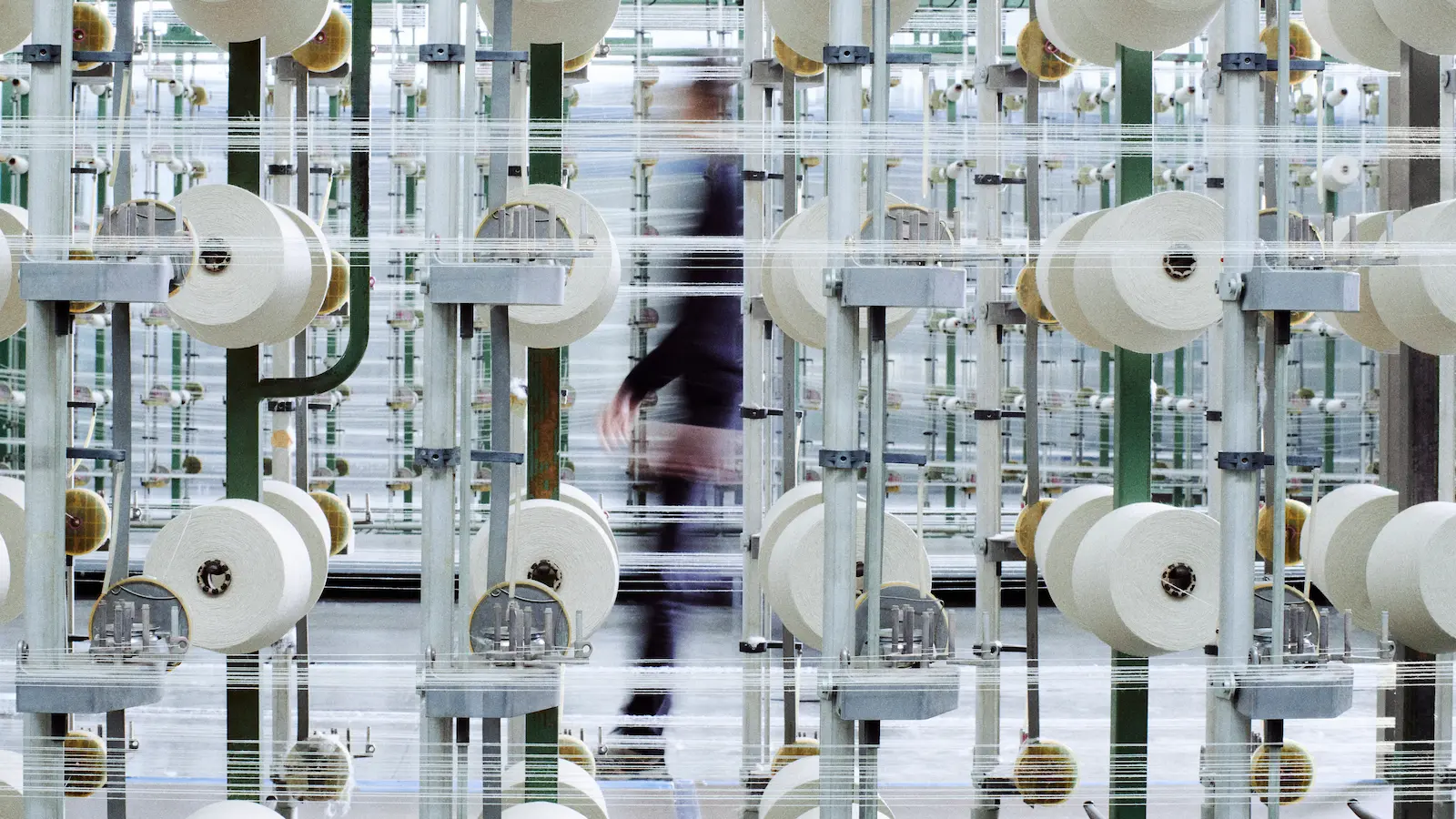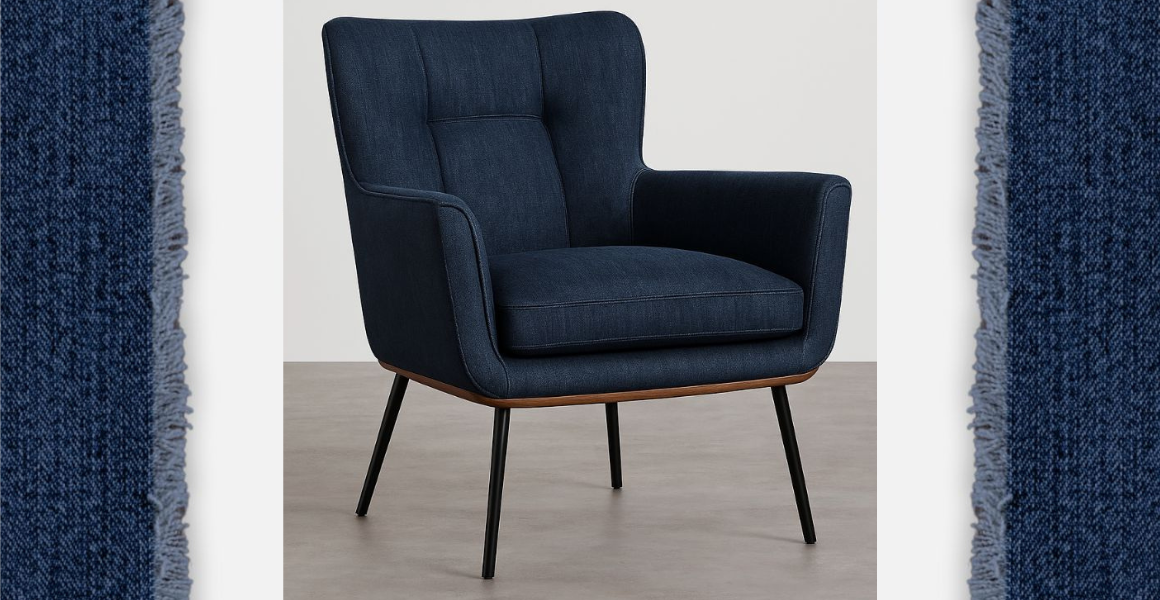
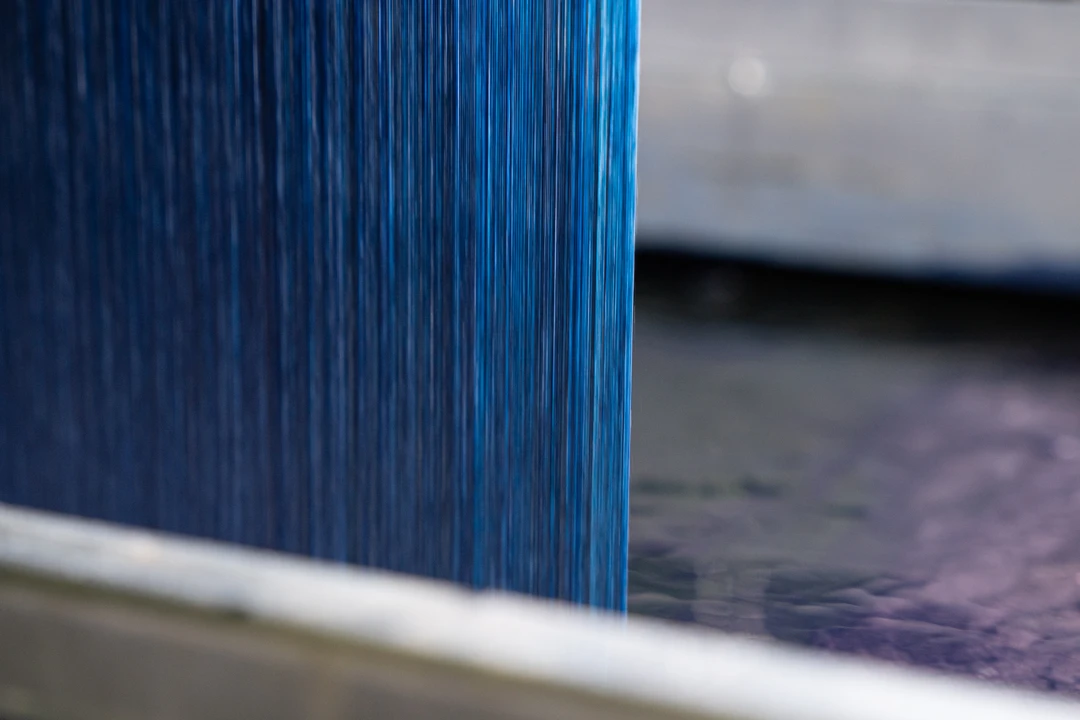
Each collection begins with a different starting point: an archive reference, a shade, a tactile sensation, a new fiber, a desired performance, or an aesthetic identity yet to be defined.
Berto joins the project from the very beginning, bringing textile expertise, product knowledge, research capabilities, and a network of specialized partners built up over years of collaboration in the industry. The goal is to understand the brand’s language and translate it into concrete parameters: composition, weave, weight, elasticity, color, hand feel, finish, and wash performance.
Consulting thus becomes a dialogue between creativity and industrial expertise, where every decision is evaluated in relation to the desired aesthetic result, the intended use, and the product’s overall coherence. An image, an archival piece, or a fabric sample can open up different paths and serve as the starting point for new designs: an understanding of denim allows us to anticipate how the yarn, weave, indigo, finishing, and washing will interact, guiding the project toward a precise and recognizable result. This approach is particularly relevant for premium and luxury brands, for which the fabric is not merely a medium but a narrative element and a defining feature of the collection.
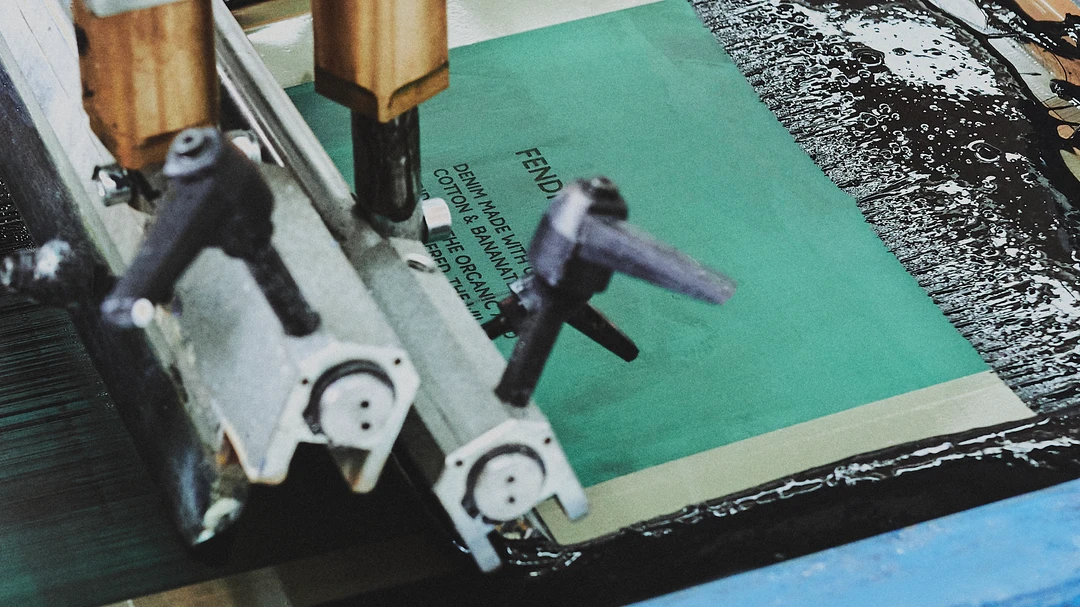
The Bespoke Denim Hub: From Concept to Custom-Made Denim
Through the Bespoke Denim Hub, Berto offers a design space where creative and technical expertise come together to develop exclusive fabrics.
Matter as the First Creative Act
The selection can include organic cottons, innovative fibers, or blends designed to meet specific requirements. The composition affects the fabric’s appearance, comfort, durability, and how the denim will age over time.
Structures, Weights, and Textures
From 3/1 twill to the most sophisticated weaves, each weave alters the fabric’s surface and character. Our consulting services allow you to fine-tune the structure, weight, and density to create denim that is lightweight and fluid, compact and authentic, or engineered for specific performance requirements.
Color as a Signature
Indigo offers a world of depth, nuances, and evolution: denim fully reveals its identity through time, wear, and washing. This is complemented by custom dyes and color palettes, designed to harmonize with the collection’s concept.
In addition to indigo, Berto also develops sulfur dyes to expand the color palette available to brands, while remaining true to the same philosophy of color research. One example isULTRA BLACK, a new-generation sulfur dye developed in-house that applies to the black shade the same principle that makes indigo a color that remains vibrant over time: surface dyeing (ring-dyeing) leaves the core of the yarn white, so that the black—ultra-saturated and deep to begin with—fades with sharp, high-definition contrasts over time, rather than fading uniformly as happens with a through-dye. Berto also uses sulfur dyes for other shades in the warp—the ULTRA COLOR range—following the same approach: a color conceived not as a final destination, but as a material that will continue to evolve with the garment.
Finishes and Distinctive Details
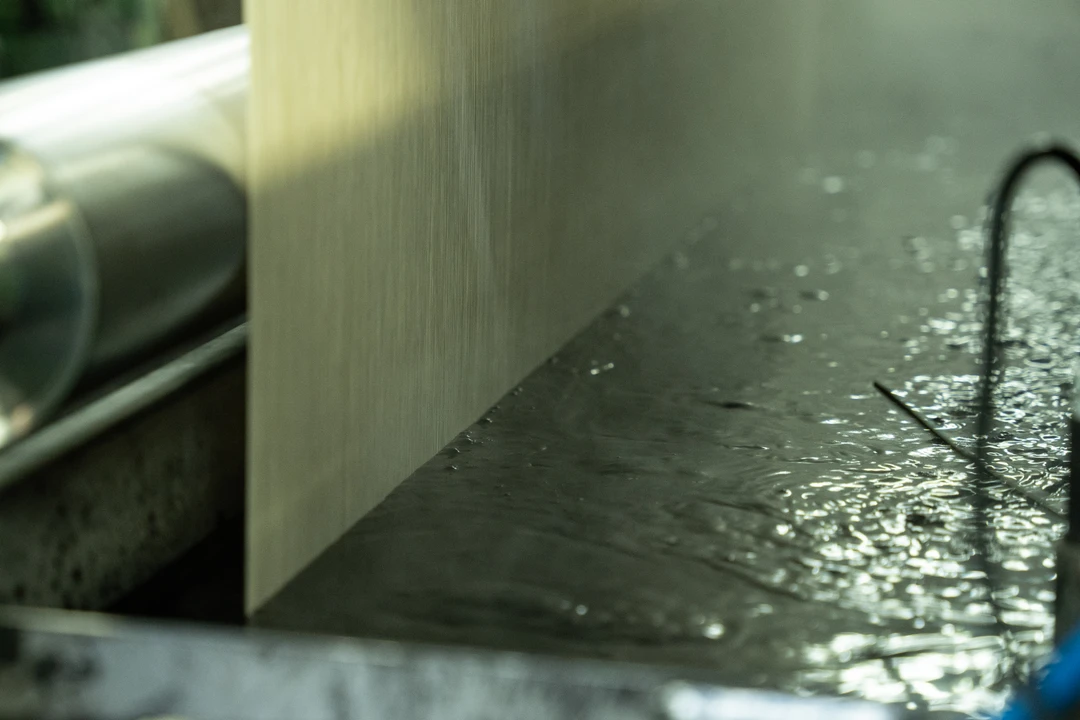
Hand feel, softness, durability, water repellency, and aesthetic effects can be achieved through targeted finishes. Prints, flock, resins, and appliqués further expand the range of expressive possibilities and allow for the incorporation of recognizable brand elements into the fabric.
For low-impact finishing, Berto also uses specialized technologies such as Jeanologia machinery, which enable the achievement of aesthetic and performance effects while reducing water and chemical consumption compared to traditional processes.
Sustainability and Certifications: What Premium Denim Can Really Tell Us
A responsible textile project is judged by its actions, not by its slogans. That is why Berto Consulting provides brands only with verifiable claims, each linked to a certification, a recognized standard, and a traceable supply chain.
Organic cotton and recycled cotton
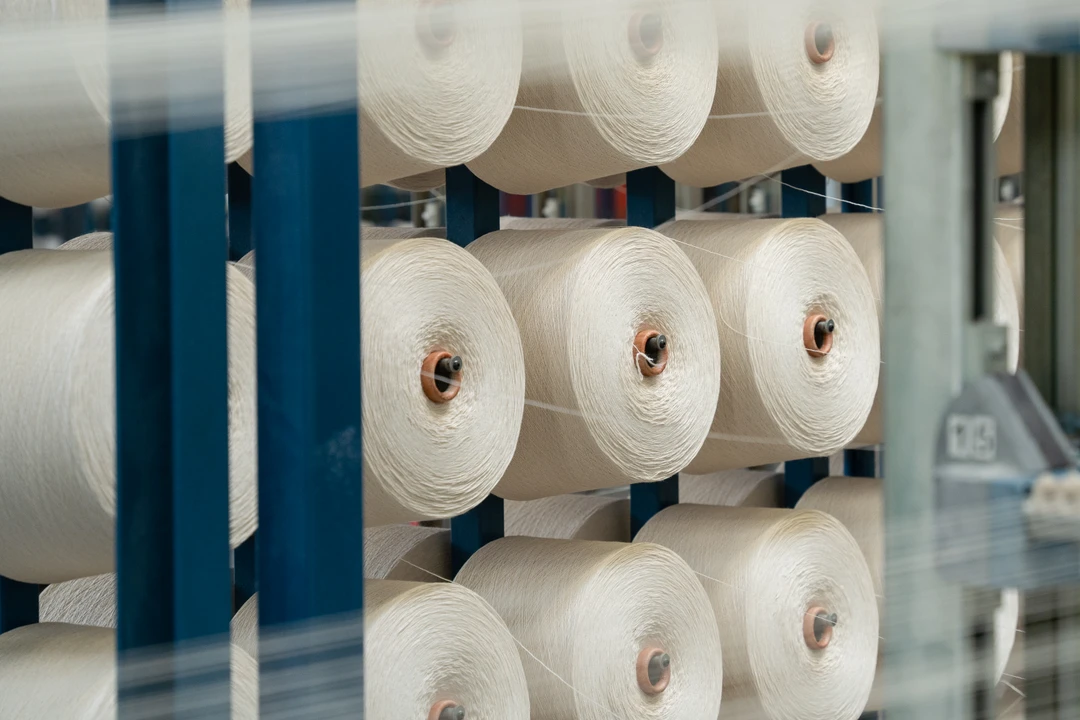
Fabrics made from organic cotton are GOTS (Global Organic Textile Standard) certified, which attests to compliance with environmental and social criteria throughout the entire supply chain, from fiber harvesting to the labeling of the finished product. Alongside GOTS, OCS (Organic Content Standard) certification also plays an important role, verifying the presence and percentage of organic cotton in the product. Fabrics made from regenerated fibers, on the other hand, are GRS (Global Recycle Standard)-certified, which independently verifies both the recycled content and compliance with environmental and social criteria at every stage of the production chain.
Dyeing and Finishing with Controlled Impact
In the dyeing process, Berto uses GOTS-certified natural indigo and pre-reduced indigo, as well as reactive dyes — used not as substitutes for indigo, but to achieve colorfast shades that do not fade — natural and biodegradable sizing agents, and DETOX-approved chemicals that comply with REACH and ZDHC regulations. In the finishing process, ozone treatment reduces water consumption by up to 85% and CO₂ emissions by 32% compared to a standard process: a verifiable technical fact, not a generic claim.
New Fibers, New Standards: The Bananatex® Case
Research into alternative materials follows the same principle. With MUSA, the project developed in collaboration with Bananatex®, Berto introduced fiber derived from abacá (Manila hemp) into denim for the first time, combining it with organic cotton. According to Bananatex®’s technical documentation, the fiber meets the requirements of the EN 13432 and ISO 14851 standards for biodegradability and industrial compostability: a characteristic of the fiber that must always be evaluated in conjunction with the complete composition of the finished fabric, the dyes, and the treatments applied. Discover the MUSA project by Berto × Bananatex® —a useful example of how to effectively communicate innovation in a material.
How to Communicate Sustainability Without Risking Greenwashing
As of September 27, 2026, the new EU rules against greenwashing (Directive (EU) 2024/825, transposed by Legislative Decree 30/2026) are fully enforceable in Italy. These rules prohibit generic environmental claims such as “eco-friendly,” “green,” or “sustainable” when they are not supported by solid and verifiable evidence, and extend partial claims (such as “recycled”) to the entire product when they apply only to a single component. For this reason, in Berto’s consulting services, every environmental claim is always backed by a certification (GOTS, OCS, GRS), a technical standard (EN 13432, ISO 14851), or a measurable process metric (water savings percentages, CO₂ reduction)—never to a generic label.
Research and Development: Bringing the Unprecedented to Life
Research and development is where experience, experimentation, and industrial culture come together. Berto’s R&D department studies fibers, yarns, dyes, weaves, treatments, and processes to expand the possibilities of denim, improving its quality, functionality, performance, and—where applicable—environmental profile.
In this process, innovation is not an element added to the material: it arises from the way each component is selected, combined, and transformed. Dialogue with companies, institutions, designers, and specialized partners—as demonstrated by our collaboration with Bananatex®—strengthens this capacity for exploration and enables us to tackle complex design challenges through complementary expertise.
Prototyping turns vision into reality
The prototyping phase allows us to practically verify the choices made and progressively refine the result. Thanks to the expert staff in the R&D Department, the team develops quick and precise samples and variations, making adjustments to the design, structure, weight, hand feel, and color palette, thereby reducing time and waste during the sampling phase. The fabric is examined, touched, tested, and refined before mass production, ensuring a solution that is consistent with both the project’s identity and the needs of the supply chain.
An integrated process, from dyeing to quality control
The value of Berto’s consulting services extends throughout all stages of development. Indigo dyeing, weaving, finishing, piece washing, logistics management, and quality control are all part of an integrated system of services, in which diverse areas of expertise work in harmony to ensure consistency between the creative vision and the final result.
Every fabric undergoes rigorous testing at every stage of production: colorfastness tests, dimensional stability, strength, and durability, as well as visual and instrumental inspections, certified protocols, and complete traceability for every batch. These are essential requirements for denim intended for the premium and luxury segments.
Denim as an Expression of Brand Identity
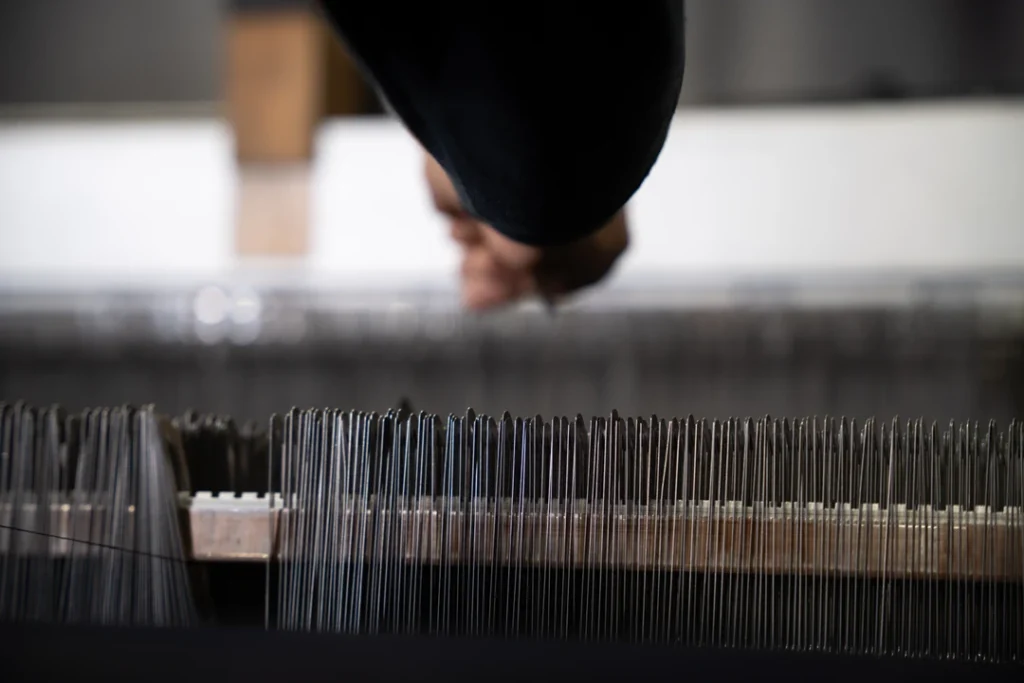
A bespoke fabric gains value when it conveys something that is unique to the brand: a particular understanding of sophistication, a unique relationship with color, a commitment to comfort, a nod to heritage, a concrete commitment to sustainability, or a more contemporary vision of the material.
Berto’s denim consulting service was created to foster this connection. It does not follow a predefined formula, but rather a method grounded in listening, research, experimentation, curiosity—understood as the drive to experiment, innovate, and create things that have never been done before—and precision in manufacturing: the result is denim developed specifically for each project, capable of uniting creative identity, quality, and production feasibility.
Develop your denim project with Berto
Do you have an idea, a reference, or a new textile challenge to explore?
Contact the Berto team to turn your concept into custom-made denim, or learn more about the Bespoke Denim Hub.
Frequently Asked Questions About Berto’s Denim Consulting Services
What does a denim consultant do?
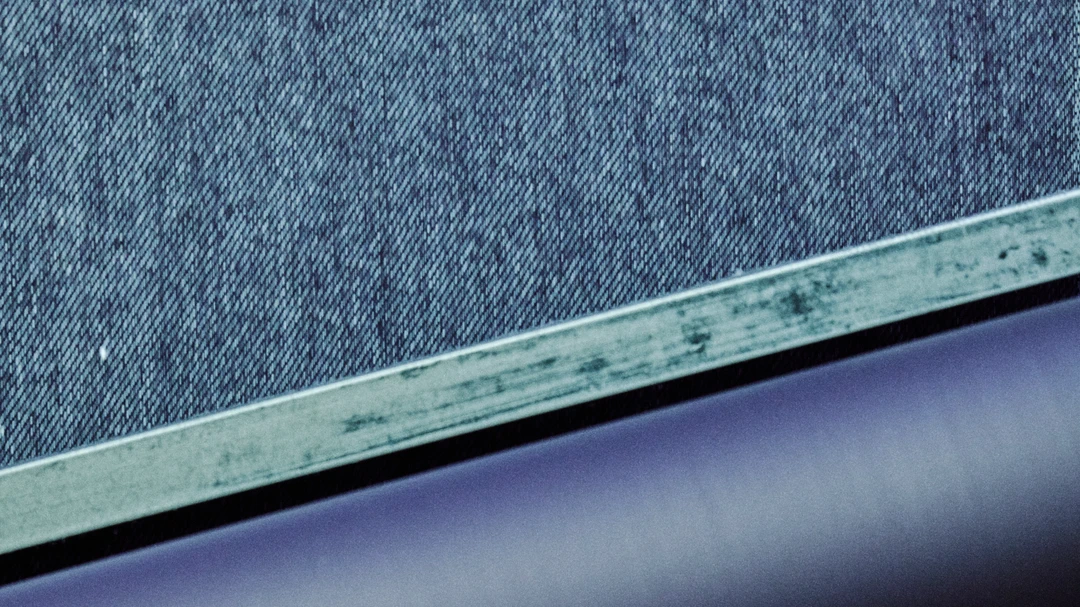
A denim consultant works alongside brands and designers in the conceptualization and development of the fabric—from the selection of fibers and weaves to the definition of color, hand, and finishes. Unlike a traditional supplier, the consultant gets involved right from the creative phase, before the fabric is finalized for the catalog.
What is Berto’s Bespoke Denim Hub?
This is Berto Industria Tessile’s design studio dedicated to the development of exclusive, custom-made denim, where the fabric’s composition, structure, weight, color, and finishes are determined in collaboration with the customer.
How long does it take to develop custom denim?
Timelines vary depending on the complexity of the project (new fiber, unique finish, custom color palette). The rapid prototyping phase reduces both time and waste compared to traditional development, but for an accurate estimate, you’ll need to share the brief with the Berto team.
What is the MUSA by Berto × Bananatex® collection?
This research project combines organic cotton and abaca fiber (Bananatex®) in a premium Made in Italy denim collection developed by Berto Industria Tessile. It was also used in FENDI’s Fall/Winter 2026–27 collection.
Is it true that denim made with Bananatex® is biodegradable?
According to Bananatex®’s technical documentation, abaca fiber meets the requirements of the EN 13432 and ISO 14851 standards for biodegradability and industrial compostability. The finished denim, however, is a different story: the organic cotton in the blend significantly slows down the biodegradation process, and the chemicals used for indigo dyeing are not biodegradable. The correct answer, therefore, is no: MUSA denim is not biodegradable as a whole, even though the source fiber is. For a more in-depth technical explanation, the Berto team has made a presentation on MUSA fabrics available.
Does Berto work exclusively with luxury brands, or does he also work with smaller companies?
The consulting approach is designed for premium and luxury brands, but it is also open to smaller companies that have an exclusive project and a clear vision to develop: what matters is not the size of the brand, but the willingness to invest in a distinctive identity and a dedicated development path. To determine whether your project is a good fit, we recommend contacting the team directly.
How do I contact Berto to start a denim project?
You can contact the Berto team through the Contact Us page on the website, learn more about the service on the page dedicated to the Bespoke Denim Hub, or reach out via the company’s social media channels and directly contact the people who work at Berto—often the first point of contact for those who find out about us through word of mouth.